Bell 206B-1 planet-bearing endurance-test data
A 323 MB MATLAB dataset containing wear-debris and oil-temperature records together with 20 selected vibration files from the Bell 206B-1 endurance test.
Dataset at a glance
| Item | Approved description |
|---|---|
| Gearbox | Bell 206B-1 (OH-58) main rotor gearbox, four-planet version |
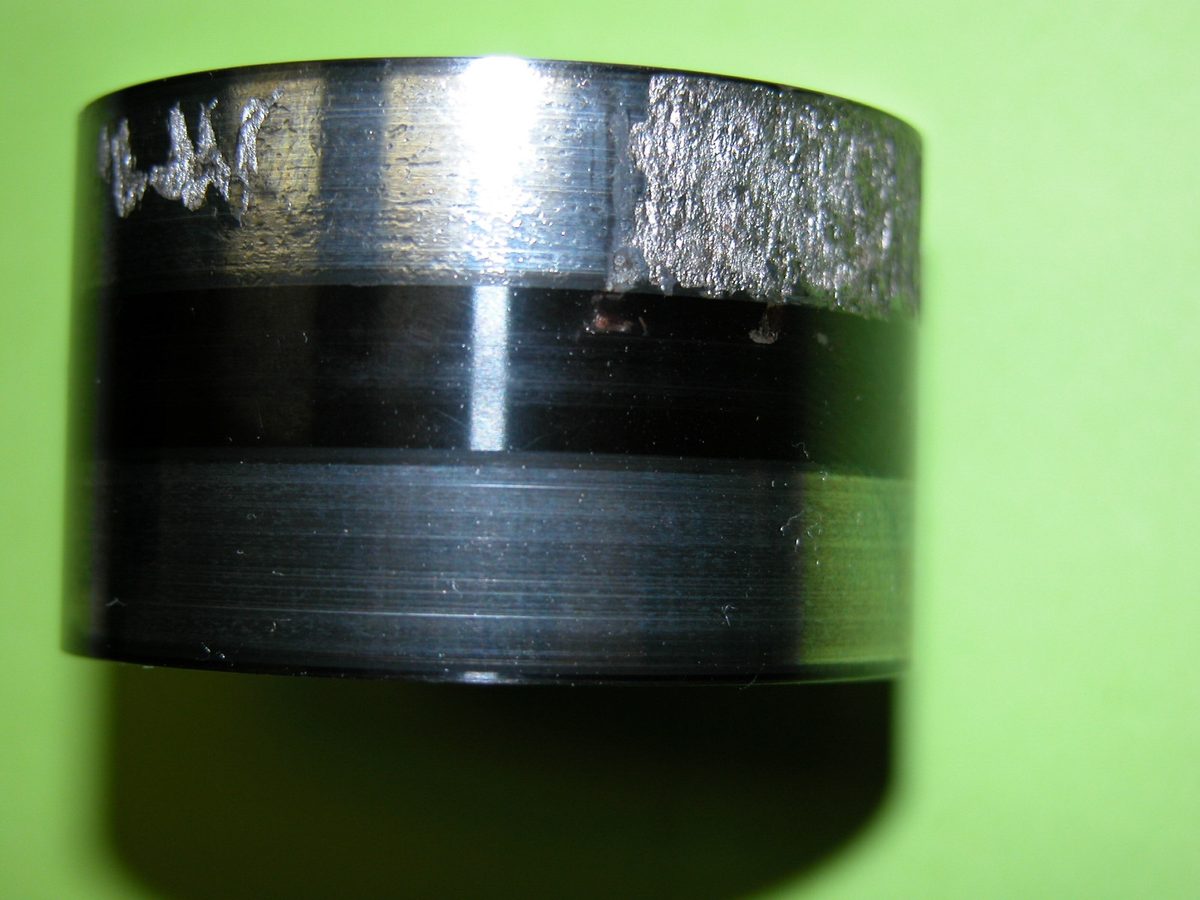
| Fault | Naturally occurring inner-race spalling on one planet bearing |
| Dataset size | 323 MB |
| Format | MATLAB, double arrays |
| Vibration files | 20 files, each 15 seconds long, recorded at 100% rated load |
| Sampling rate | 51,200 Hz |
| Array size | 768,000 × 6 per vibration file |
| Channels | Tach1, RR-1, IP-2, Tach2, RF-3, RL-4 |
| Additional variables | Fe_Cum_mg, Oil_Temp and Test_Hours |
Signal alignment
The legacy Metrum tape recorder could export only three channels at a time. The signals were therefore exported in two passes.
- Tach1 aligns with RR-1 and IP-2.
- Tach2 aligns with RF-3 and RL-4.
- The two tachometer channels are not aligned with each other.
Use Tach1 for order tracking, angle-domain resampling or synchronous averaging of RR-1 and IP-2. Use Tach2 for RF-3 and RL-4.
Gearbox and fault frequencies
Gear geometry
Tooth numbers: pinion 19, bevel 71, sun 27, planet 35 and ring 99.
Nominal input speed: 100 Hz. Carrier/output speed: approximately 5.73 Hz. Reduction ratio: 17.44.
Calculated planet-bearing frequencies
Inner-race defect frequency: approximately 120.0828 Hz, or 20.9408 carrier orders.
Outer-race defect frequency: approximately 74.5593 Hz, or 13.0021 carrier orders.
Sensor locations
| Channel | Location |
|---|---|
| RR-1 | Ring-rear of the gearbox, upper housing flange near the ring gear |
| IP-2 | Input-pinion flange |
| RF-3 | Ring-front of the gearbox, upper housing flange near the ring gear |
| RL-4 | Ring-left side when facing the front, upper housing flange near the ring gear |
Endurance-test conditions
| Parameter | Description |
|---|---|
| Load cycle | 30 minutes: 150% load for 27 minutes, then 120%, 100% and 80% for one minute each |
| Data collection | Approximately 60 seconds recorded at 150%, 120%, 100% and 80% at the end of each cycle |
| Reduced load | Maximum load reduced to 100% after the wear-debris jump at 56.97 test hours |
| Test stop | 80.21 test hours after exponential growth in cumulative wear-debris mass |
Approved technical reference
This page summarises the dataset for convenient reference. Participants should read the approved PDF before beginning their analysis because it contains the complete equations, assumptions, test description and references.
Download the approved PDF