01
Full-scale test
Data from a Bell 206B-1 four-planet main rotor gearbox tested at the DSTG HTTF.
The HUMS2027 Data Challenge uses selected data from a full-scale Bell 206B-1 helicopter main rotor gearbox endurance test conducted at DSTG's Helicopter Transmission Test Facility in 2004. One planet-bearing inner race developed extensive naturally occurring spalling damage. The data were not publicly available, and only a limited number of researchers had previously examined them.
Data from a Bell 206B-1 four-planet main rotor gearbox tested at the DSTG HTTF.
Extensive spalling developed naturally on the inner race of one planet bearing — no seeded or simulated fault.
Physics-based, signal-processing, data-driven, AI, hybrid — any approach is welcome.
Demonstrate the earliest convincing detection and the most accurate trend of fault progression.
A previous blind analysis applied order tracking, discrete/random signal separation, minimum entropy deconvolution, spectral kurtosis and cyclostationary analysis. That limited study did not identify the planet-bearing defect frequency or establish a convincing trend of damage progression. HUMS2027 now makes a curated dataset available to registered challenge participants so that the wider community can investigate the problem using current methods.
The endurance test ran for 80.21 hours before it was stopped following exponential growth in cumulative wear-debris mass. Post-test inspection found extensive spalling on the inner raceway of one of the four planet bearings — the damage shown here.
View dataset details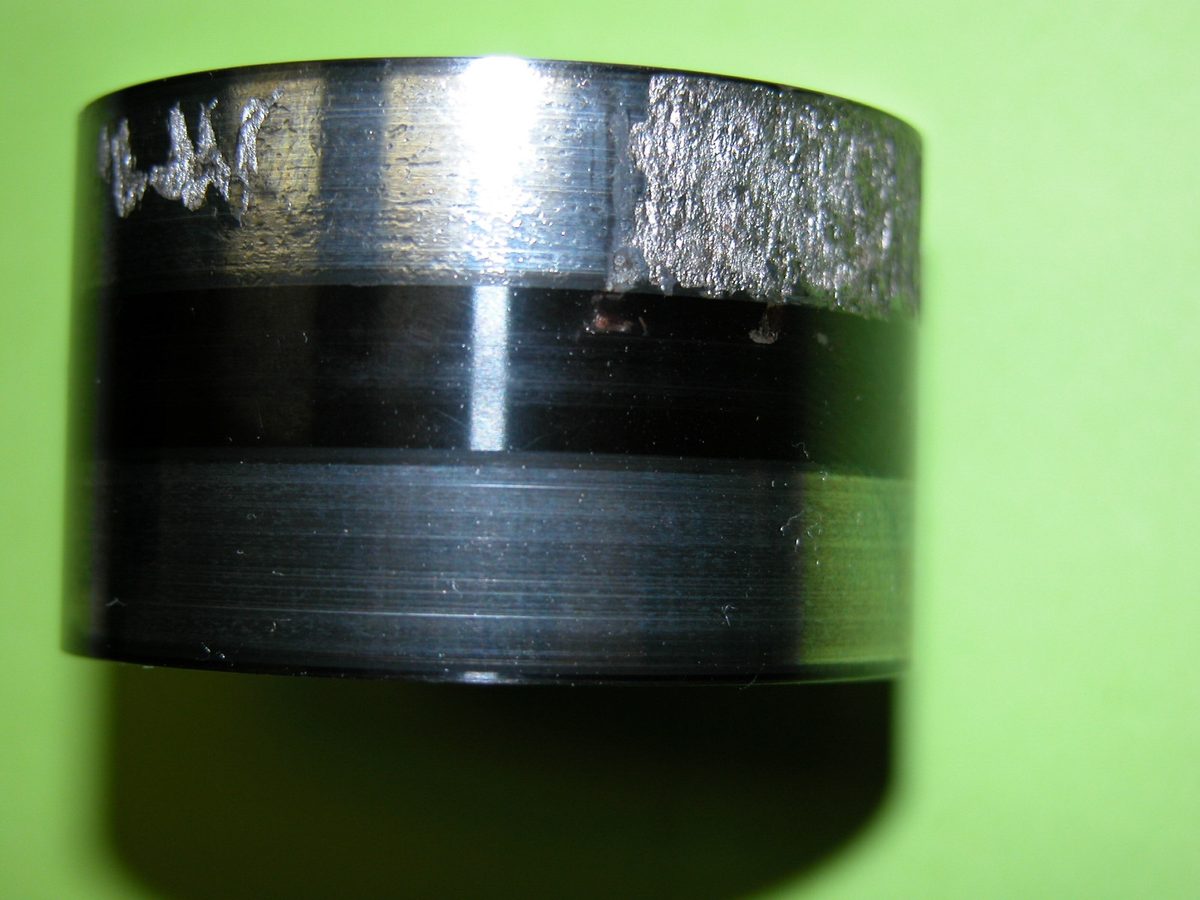
Cash prize and certificate.
Cash prize and certificate.
At least one team member attends HUMS2027 to present the team's work in person.
Registration, Terms and Conditions, dataset access and supporting documentation are available from the official Defence Science and Technology Group (DSTG) website.