A legacy endurance test revisited for HUMS2027
The challenge is based on an overload endurance test conducted by DSTG in 2004 on a Bell 206B-1 four-planet main rotor gearbox. The test produced a rare, naturally occurring planet-bearing inner-race fault.
Background
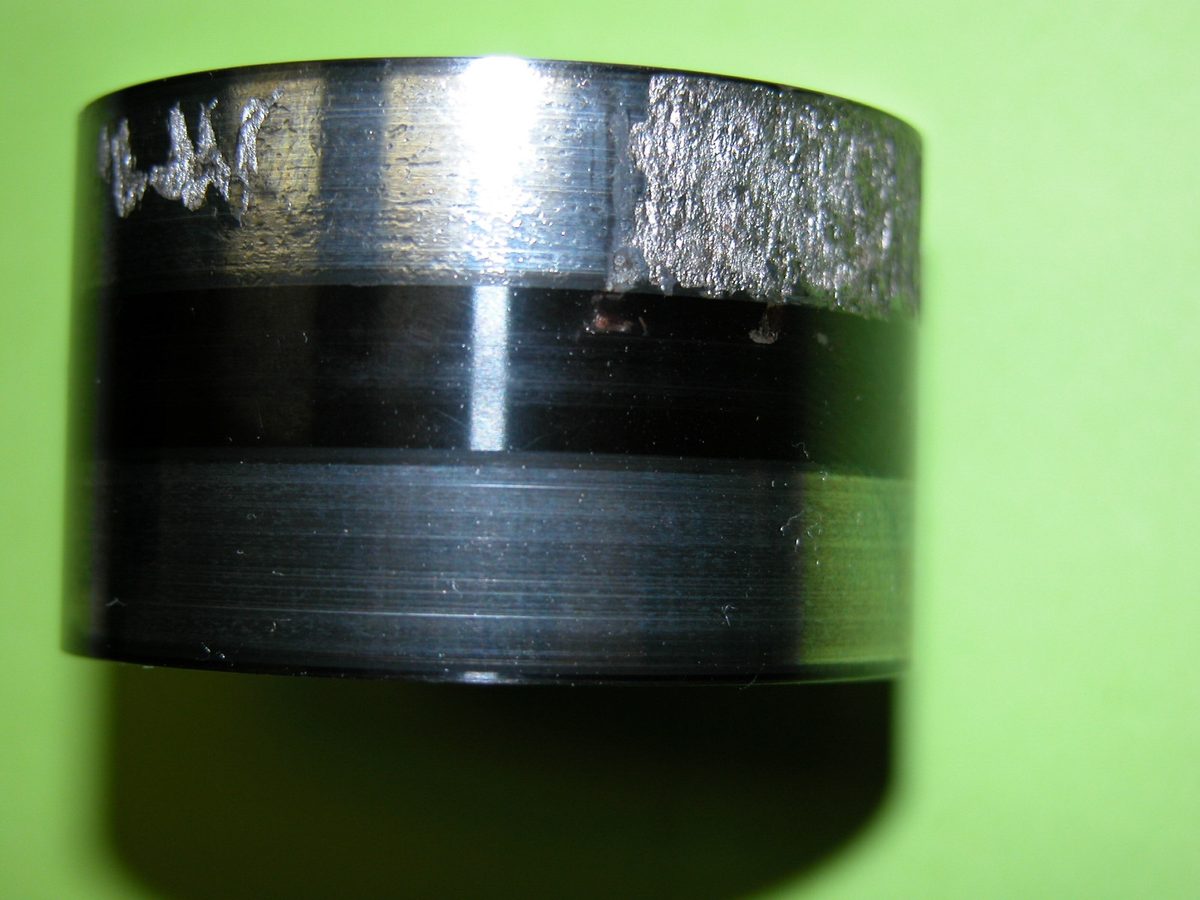
Planet-bearing faults in helicopter main rotor gearboxes are among the hardest failure modes to detect and trend. After roughly 80 hours of accelerated testing, one planet-bearing inner race developed extensive spalling damage — naturally, not seeded.
The data were not released publicly and were examined previously by only a limited number of researchers. In a blind analysis, a range of traditional diagnostic techniques did not identify the planet-bearing defect frequency or reveal a convincing progression trend. HUMS2027 now provides registered participants with a curated dataset to investigate the fault using current analysis methods.
Why the fault is difficult
Moving transmission path
The planet bearing orbits inside the gearbox, so the signal path between the fault and the fixed casing sensors is constantly changing.
Complex modulation
Planet, carrier and bearing-cage motion combine to produce multiple, overlapping modulation components.
Weak signatures
Fault-related impulses can be masked by gear-mesh vibration and background transmission noise.
Limited legacy data
The original Metrum tape-recorder hardware imposed channel-export and alignment constraints that carry through to the dataset.
Test timeline
2004 — Endurance test begins
Repeated 30-minute overload cycles were run on a Bell 206B-1 four-planet main rotor gearbox at the HTTF.
56.97 test hours — Wear debris jumps
Cumulative wear-debris mass rose suddenly from 42 mg to 105 mg. Maximum load was reduced to 100% for the remainder of the test.
80.21 test hours — Test ends
Testing was stopped after exponential growth in cumulative wear-debris mass.
Post-test inspection
One planet-bearing inner race was found to have extensive spalling damage.
HUMS2027 — Data Challenge
A curated selection of the legacy test data is released to registered participants for early fault detection and progression trending.
Official technical reference
The approved dataset description PDF is the authoritative source for every technical detail. This website is written for readability, but wherever the two differ, the PDF governs.
Open dataset description